RESOURCES
Cafe CLIL - CLIL Materials 2 - Scaffolding
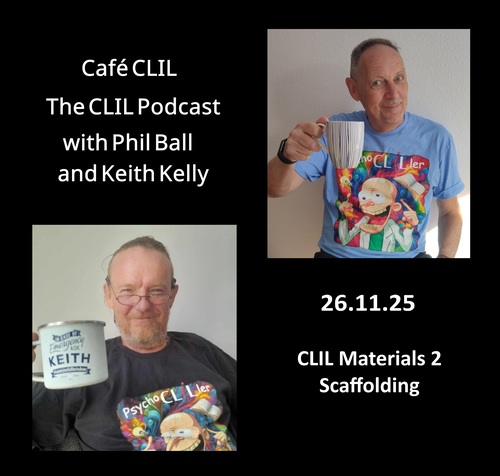
Mr Phil Ball and I will meet on Thursday 26.11.25 for Cafe CLIL 07 - CLIL Materials 2 - Scaffolding. There is so much to say about materials, who knows, we may do more on this important topic. We have a great contribution and wise advice from colleague and materials writer Katherine Bilsborough.Put the kettle on and come and join us.
#CLIL #cafeclil #puttingclilintopractice
Café CLIL 07 – Materials 2 – Scaffolding
AI Summary
Scaffolding and Embedding Language in CLIL
Keith and Phil discussed the concept of scaffolding and embedding language in CLIL. Phil explained that scaffolding primarily involves providing explicit language support, such as using speculative language to prompt students to think critically. He also mentioned the importance of embedding key language within materials and activities, allowing students to use the target language naturally. They agreed to have further discussions on the topic, including the evolution of the concept from Vygotsky's original idea to current practices.
Simplicity in Educational Materials
Keith and Phil discussed the importance of simplicity in educational materials with a valuable contribution to this end from Kath Bilsborough. They highlighted the need to keep instructions clear and clutter-free, with complex procedures often better suited for teacher guides. They also emphasized the three-way dynamic between teachers, students, and materials in the classroom, stressing the importance of a simple dynamic to aid student learning.
Simplifying Teacher Talk for Learning
Phil and Keith discussed the importance of simplifying teacher talk and instruction in the classroom to enhance student learning. They emphasized the need for teachers to use clear and concise language, focusing on the essential information and creating a supportive learning environment. Keith shared an example of a science course book that allows students to organize content in personalized folders, highlighting the value of active student engagement. They also explored the use of mind mapping as a tool for personal learning, but stressed the importance of finding non-person-specific structures in CLIL teaching.
Scaffolding Complex Learning Concepts
Keith and Phil discussed conceptual structures in teaching, particularly focusing on how to present complex information in an accessible way using flow diagrams and graphic organizers. They explored how teachers can scaffold learning by gradually introducing more complex language and concepts, using the example of Pauline Gibbons' work on scaffolding language and learning. The discussion highlighted how teachers can help students develop autonomy by providing strategic support that is gradually withdrawn as students master concepts, using the jigsaw metaphor as an example. They also touched on the importance of getting students to engage with content beyond the page, using examples like the Gruffalo story and songs like "Down by the Bay" to create conceptual spaces for learners to communicate in meaningful learning experiences.